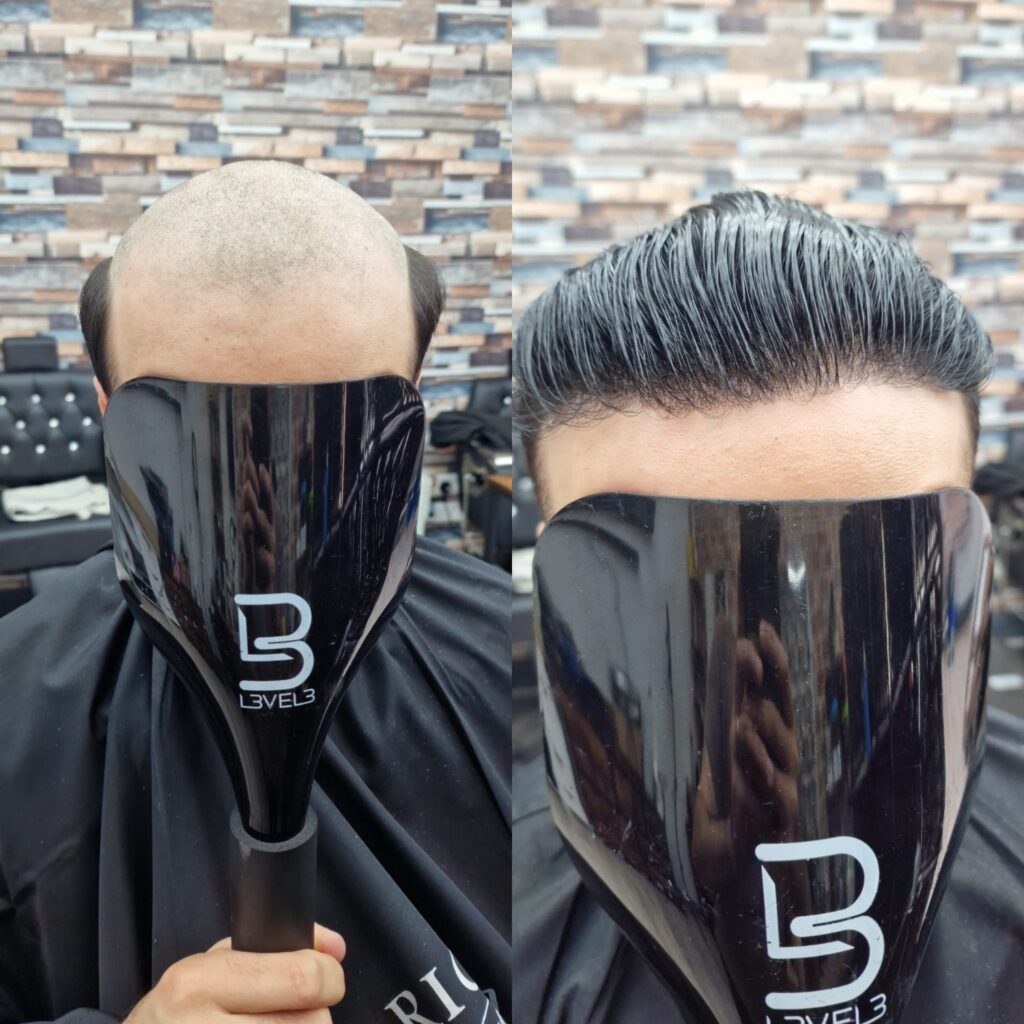
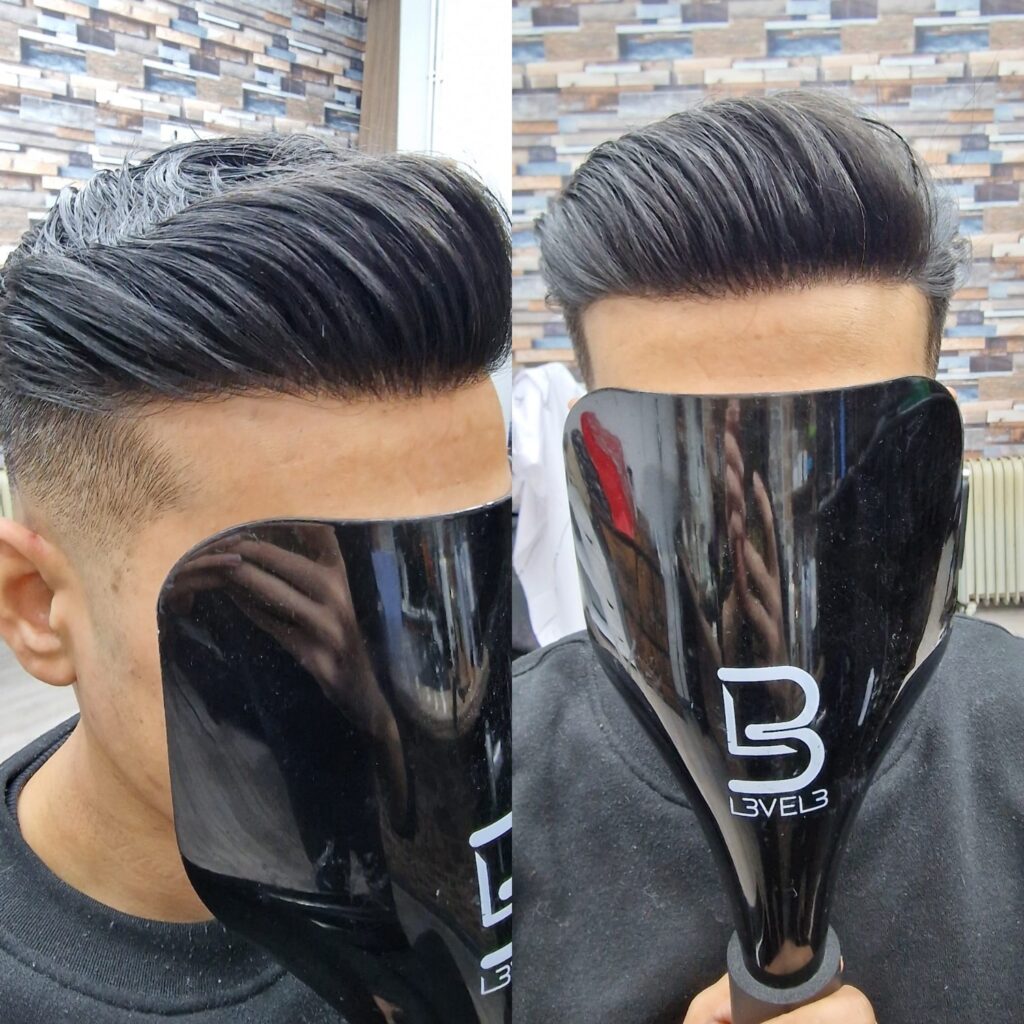
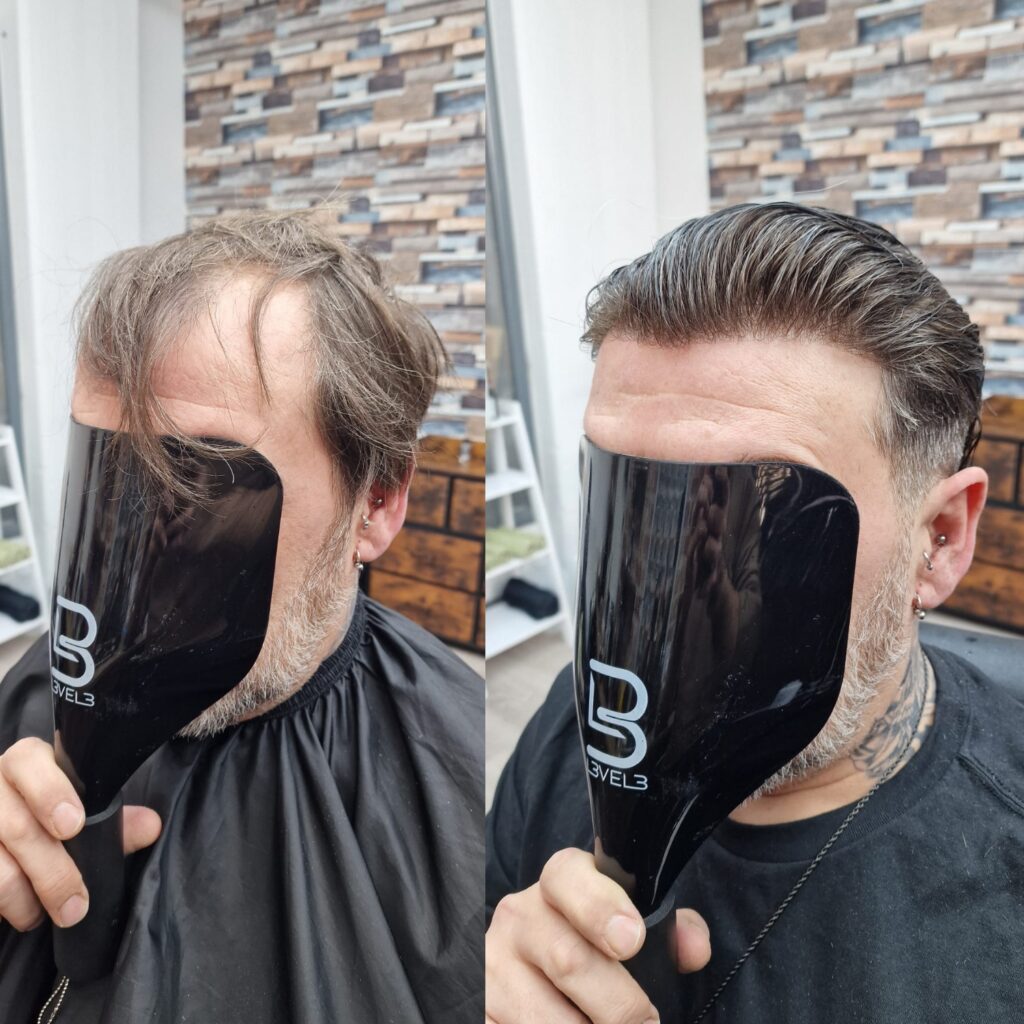
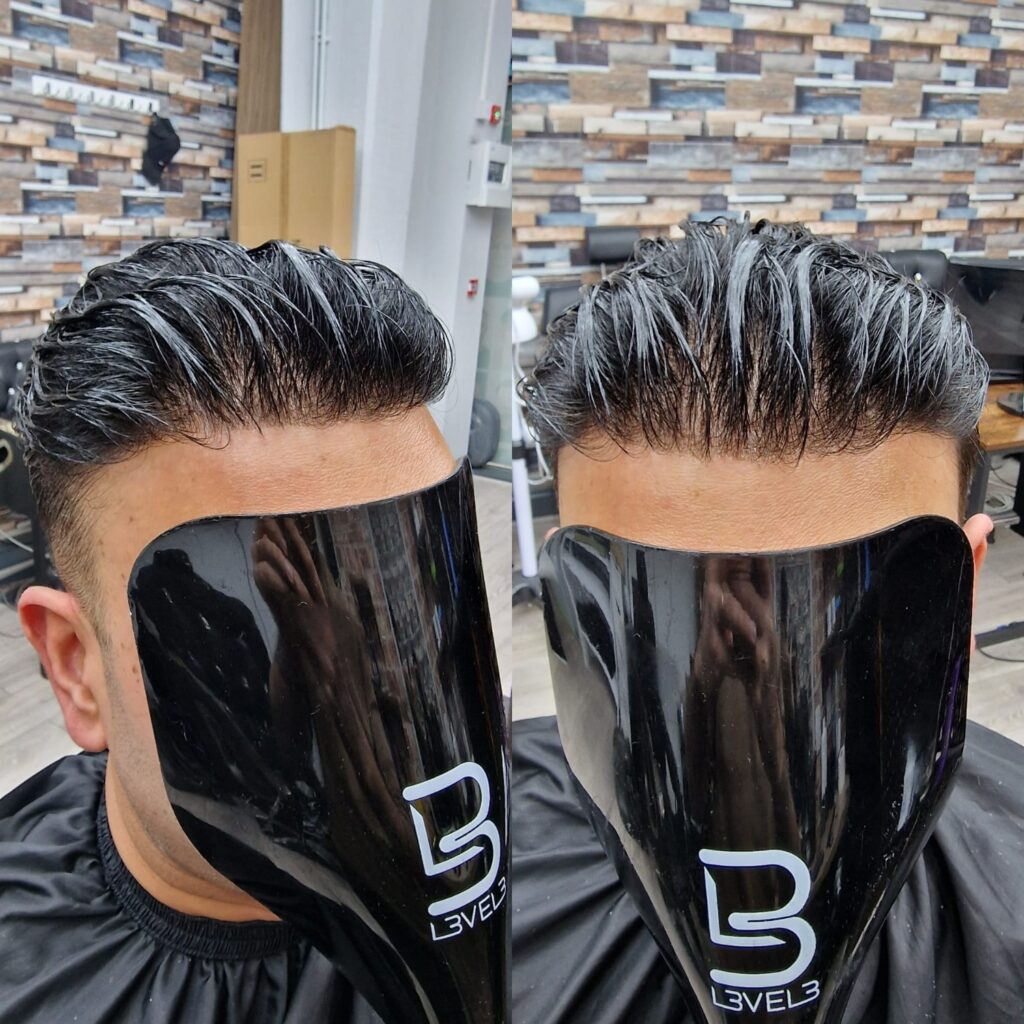
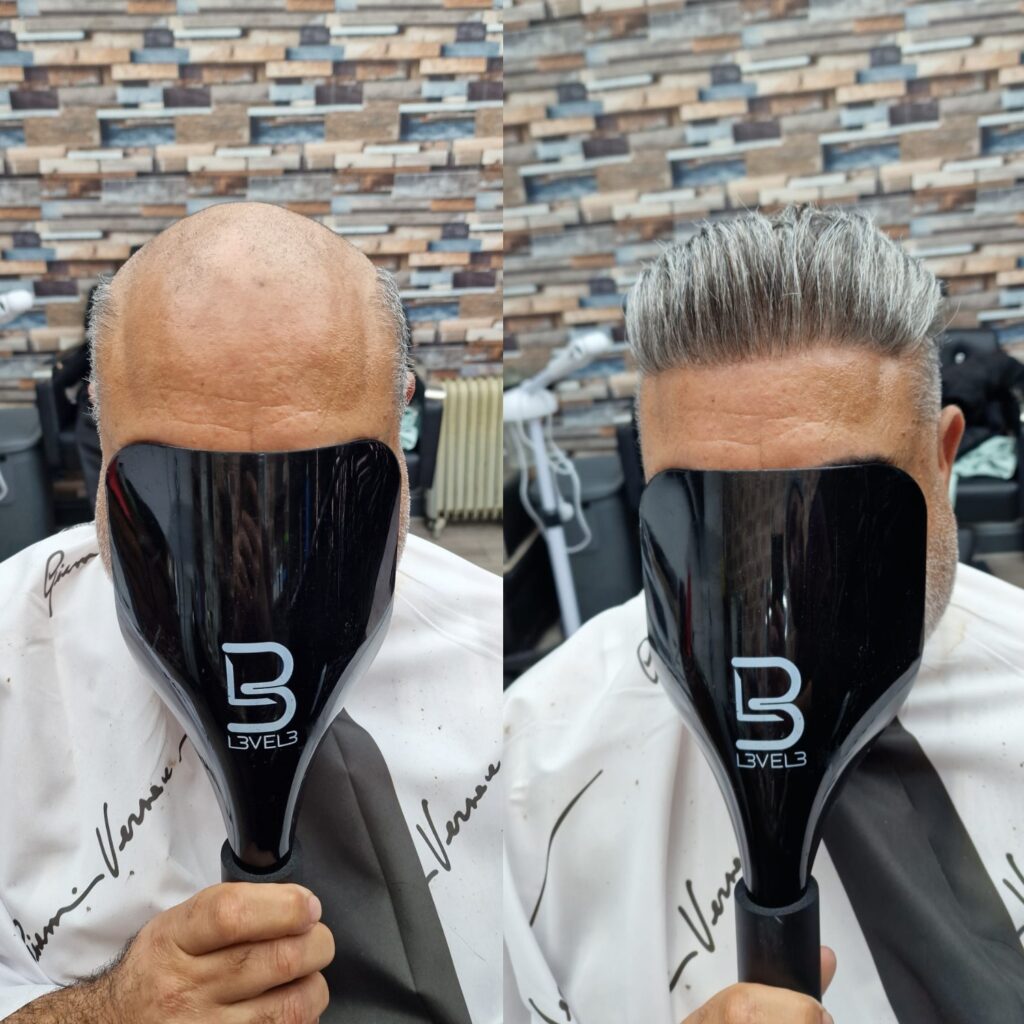
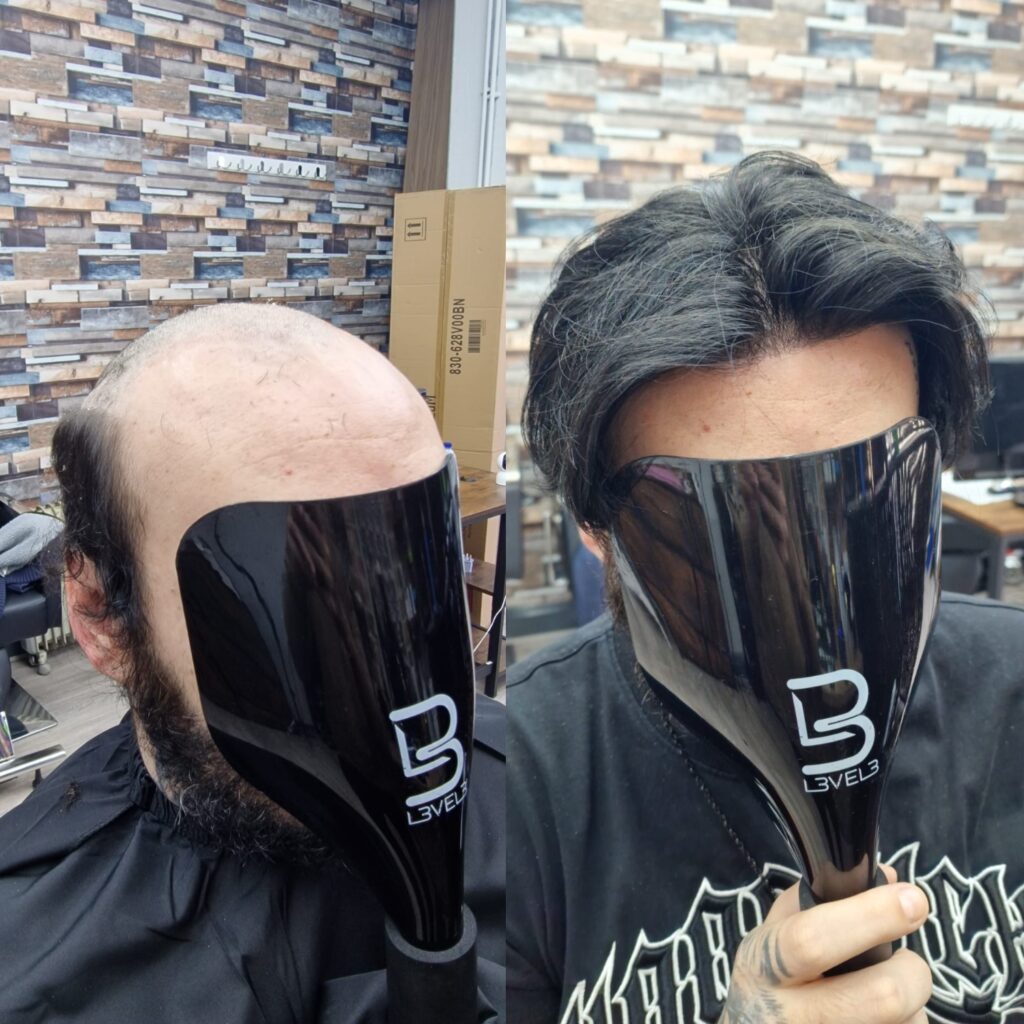
Winter is hard on a hair replacement system. Dry indoor heating pulls moisture out of the hair, cold wind and wet weather stress the bond, and the static from hats, scarves and car seats roughs up the cuticle. A system that looked perfect in September can start to look tired by January, and most of the time the first signs are easy to miss until someone else notices.
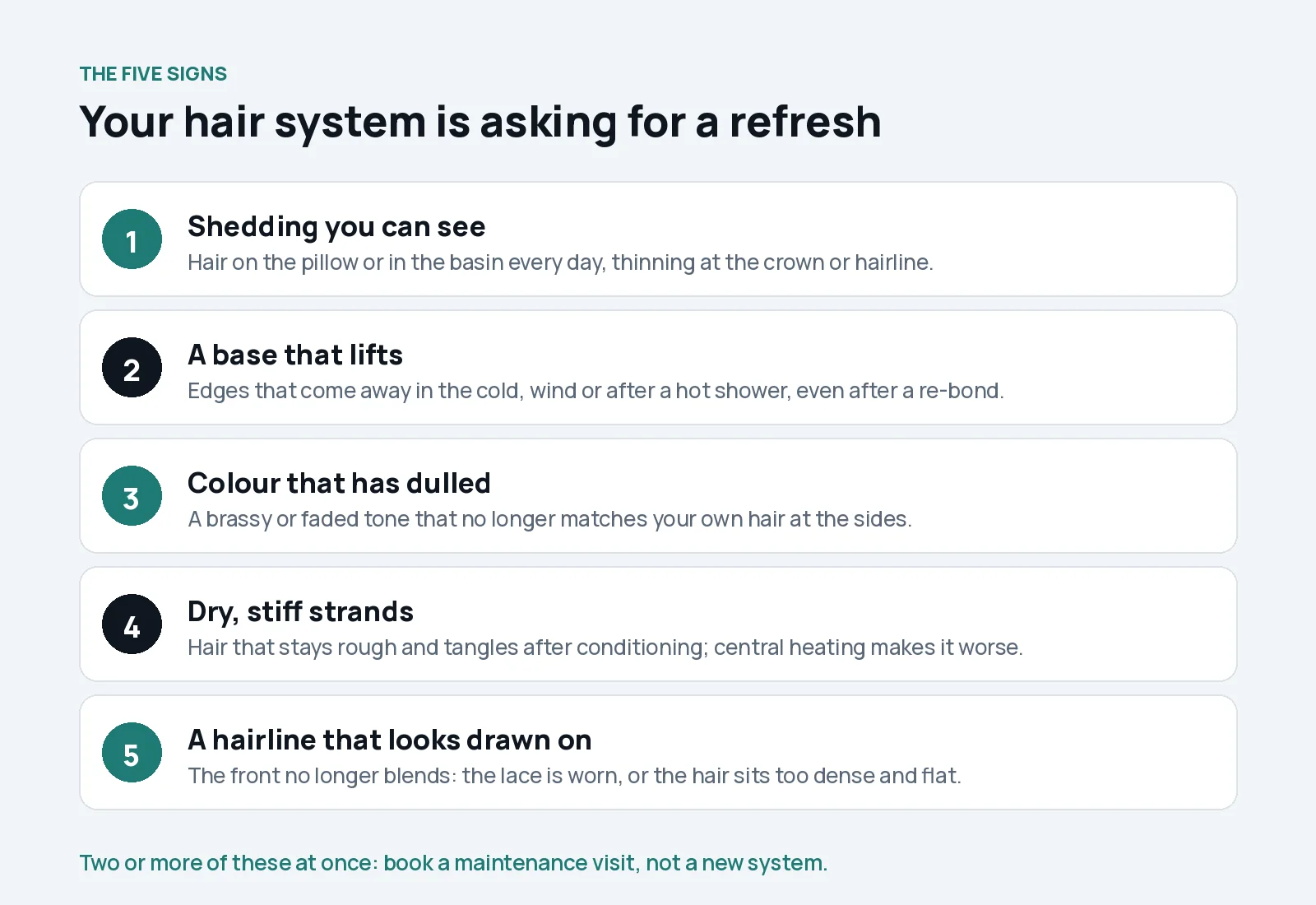
These are the five signs we see most often in the salon between November and March, in the order they usually appear, with what each one means and the fix. If you recognise two or more of them, book a maintenance visit before you decide you need a new system; more often than not, a proper service brings it back.
1. Shedding you can see
Every system loses a few hairs; that is normal and the density is designed to allow for it. The sign to watch for is hair on the pillow or in the basin every day, or a crown and hairline that are visibly thinner than they were a month ago. In winter the usual cause is dryness: brittle hair snaps at the knot, and the knots themselves loosen when the base dries out.
The fix: a leave-in conditioner after every wash, a deep conditioning treatment once a week, and no more than two washes a week. A knot sealer applied at your maintenance visit slows shedding considerably. If the density has already dropped at the front, the hairline can be re-ventilated rather than the whole system replaced.
2. A base that lifts
If the edges come away in the cold, after a hot shower or when you sweat on the train, and they come away again a few days after a re-bond, the base itself is the problem rather than the adhesive. Lace loses its stiffness with age, and a poly perimeter can harden and crack in dry air. A bond only holds as well as the surface it is stuck to.
The fix: in winter, switch to a stronger adhesive for the cold months and keep the bonding area completely dry before each application (our guide to applying a hair system at home covers the order that works). If the base lifts within a week of a professional re-bond, that is the clearest sign of all that it is time to think about a new system.
3. Colour that has dulled
Oxidation is slow, so you rarely notice it day to day. Then one morning the system has a brassy or ashy cast and no longer matches your own hair at the sides. Winter accelerates it: low sun is still UV, central heating dries the pigment and chlorine from indoor pools strips it further.
The fix: colour can be corrected on the system itself, and your own hair toned to meet it, in a single haircut and colour appointment. A UV protection spray before you go out makes the next colour last longer. Faded colour on its own is never a reason to replace a system that is otherwise sound.
4. Dry, stiff strands that will not settle
Hair that feels rough, tangles at the nape and refuses to lie down after conditioning has lost the cuticle layer that keeps it smooth. Dry indoor air, hats and heat styling all contribute. Once the cuticle has gone, no product will bring the softness back for long.
The fix: cut back on heat, sleep on a silk or satin pillowcase, and ask us to assess the hair at your next service. If the strands are brittle along their full length the system is nearing the end of its life; if only the ends have gone, a haircut to take them off buys you another couple of months.
5. A hairline that looks drawn on
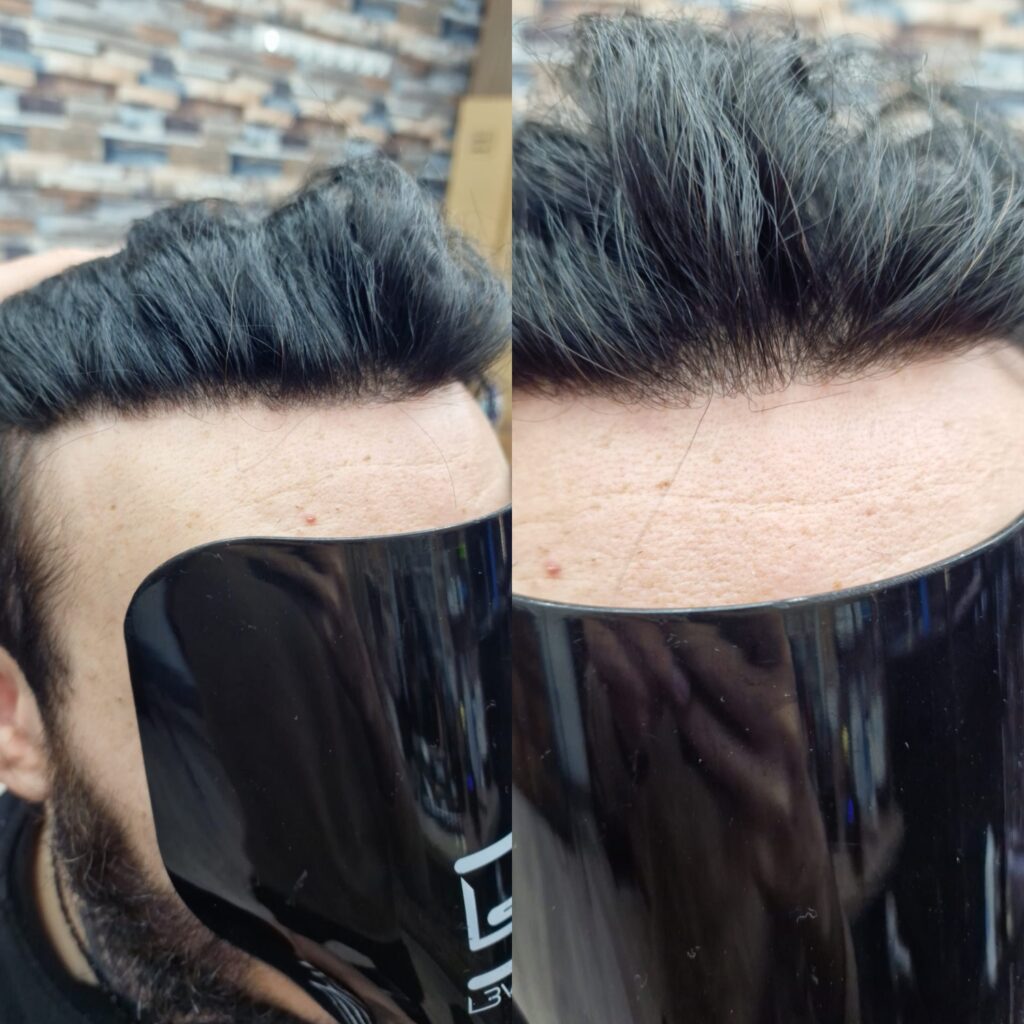
The hairline is where a system is judged, and it is the first place winter shows. Worn lace at the front, hair that sits too flat and dense after months of styling, or a perimeter that has been trimmed too far back, all make the front look like a line instead of a hairline. This is the sign people tend to leave longest and the one that is noticed most.
The fix: a fresh frontal system is the answer when the rest of the unit is fine; it replaces the front few centimetres only and costs a fraction of a full system. When the lace is worn across the whole base, it is time for a new one.
How long should a hair system last?
With a monthly service, a good human-hair system lasts three to six months of daily wear; a few of our clients get longer from poly bases. The variables that decide it are the base material (see our guide to lace, poly and hybrid bases), how much heat and sun it sees, how often it is washed, and whether it is serviced regularly. Winter takes a month or so off the average unless you adjust your routine.
A winter routine that keeps a system looking new
- Wash twice a week at most, with a sulphate-free shampoo, in lukewarm water.
- Leave-in conditioner every wash; a deep treatment once a week.
- Pat dry, then air dry where you can. If you use a dryer, keep it on cool.
- Silk or satin pillowcase, and loosen hats and scarves so they do not drag the hairline.
- UV spray before you go out, even on grey days.
- Rinse straight after swimming, and never sleep with wet hair.
- Book your maintenance visit every four to six weeks; six booked together are £400.
Refresh, repair or replace?
In the salon the decision is usually simple. One sign on its own, caught early, is a maintenance job: a re-bond, a deep clean, a colour and a cut. Two or three signs together usually mean a repair, such as a re-ventilated hairline or a new frontal. Shedding across the whole system plus a base that will not hold after a professional re-bond means a replacement, and we will tell you so rather than keep patching it.
If you bought your system elsewhere, you are still welcome: we service and fit systems from anywhere. A consultation is free, in the salon in Ilford or over WhatsApp with a couple of photos, and nobody will push you into a system you do not need.
Message us on WhatsApp Book online
Frequently asked questions
How often should a hair system be replaced?
Most human-hair systems give three to six months of daily wear with a monthly service. Poly bases often last longer; fine lace less. Winter shortens that unless you adjust washing, conditioning and heat.
Can a professional repair really extend the life of a system?
Yes. Re-ventilating a thinning hairline, replacing the frontal, correcting faded colour and sealing knots are all routine jobs that add weeks or months. We do them in the salon alongside your monthly maintenance.
Does winter sun damage a hair system?
It does. Low winter sun is still ultraviolet light, and it fades colour and dries the cuticle just as summer sun does. A UV spray before you go out is the simplest protection.
Human hair or synthetic for winter?
Human hair. It handles conditioning and heat properly, can be re-coloured, and blends into your own hair at the sides. Synthetic hair is cheaper but cannot be restyled with heat and tends to frizz in dry indoor air. Every system we fit is 100% human hair.
What does a winter maintenance visit include?
Removal, a deep clean of the system and your scalp, a check of the base and hairline, a re-bond with an adhesive suited to the season, then a cut and blend. It takes 80 to 90 minutes and costs £70, or £400 for six visits booked together.