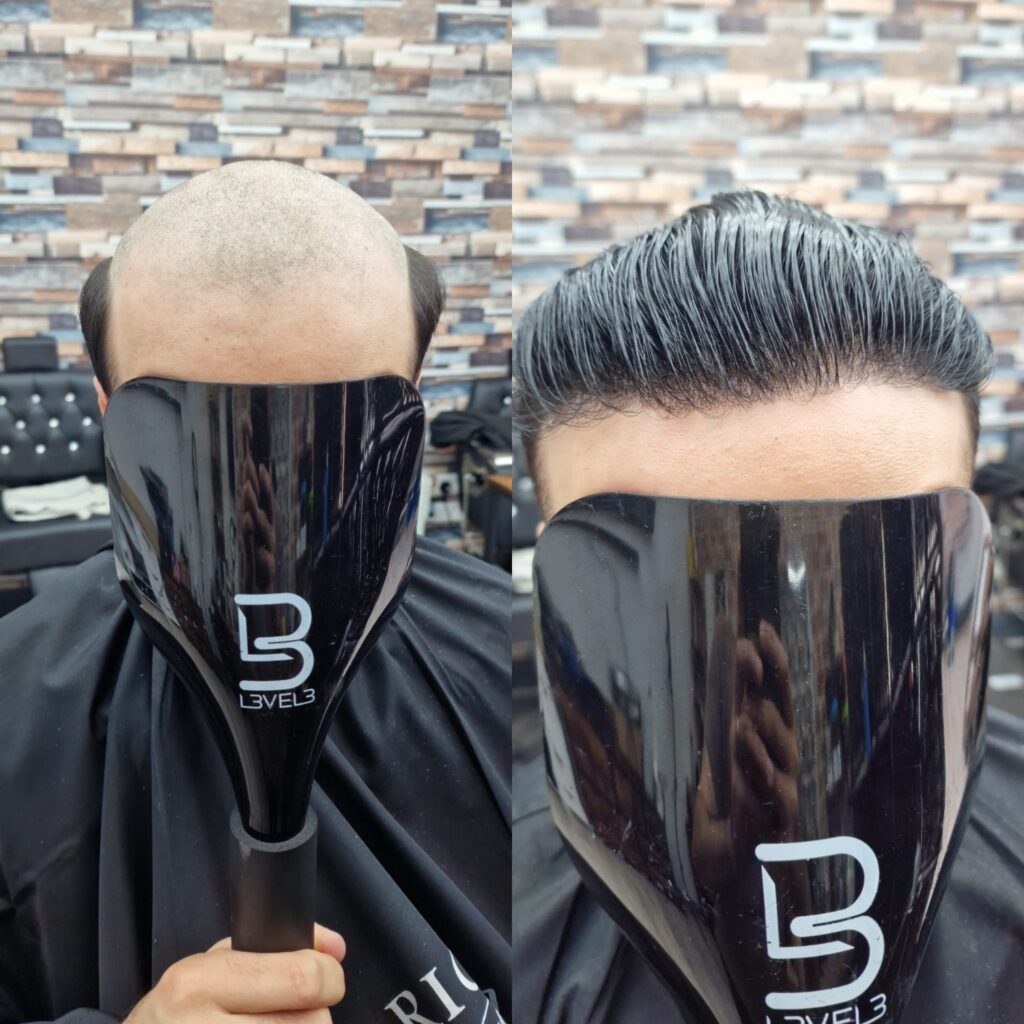
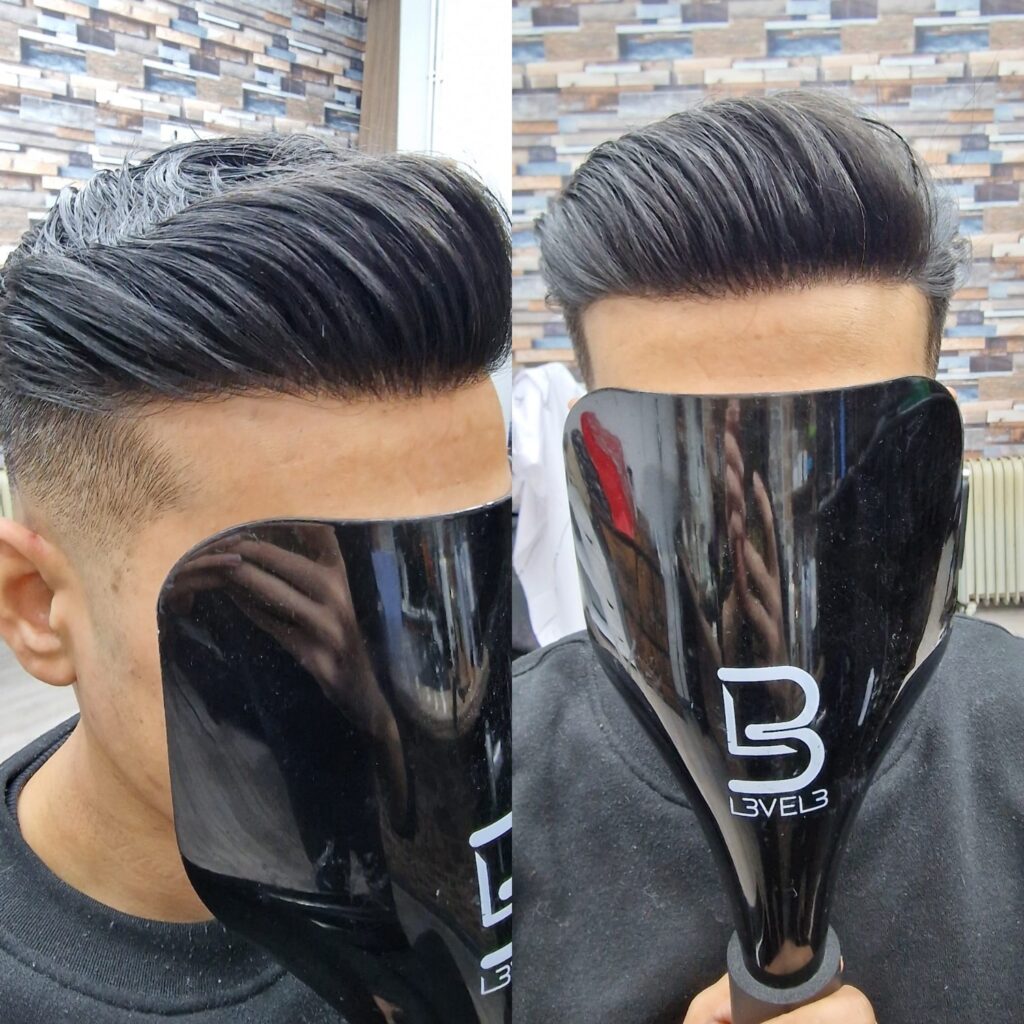
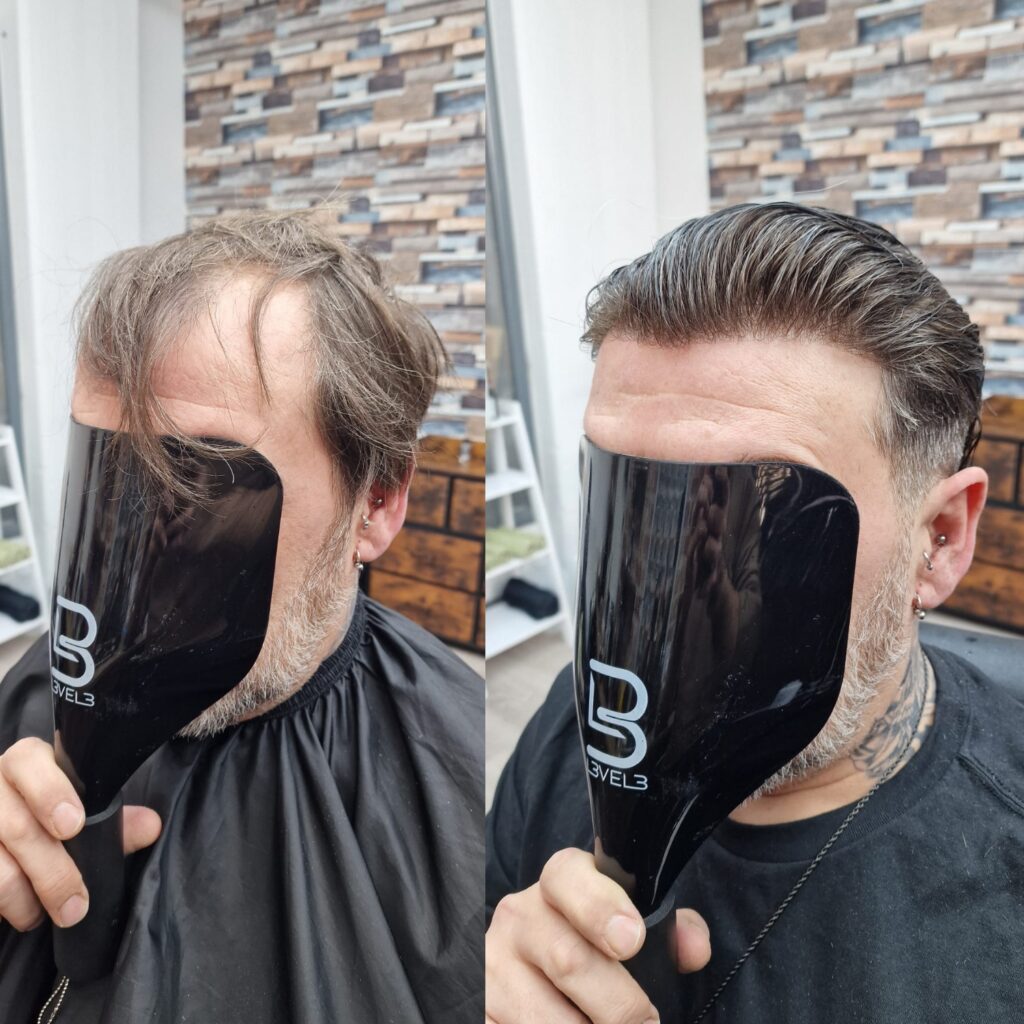
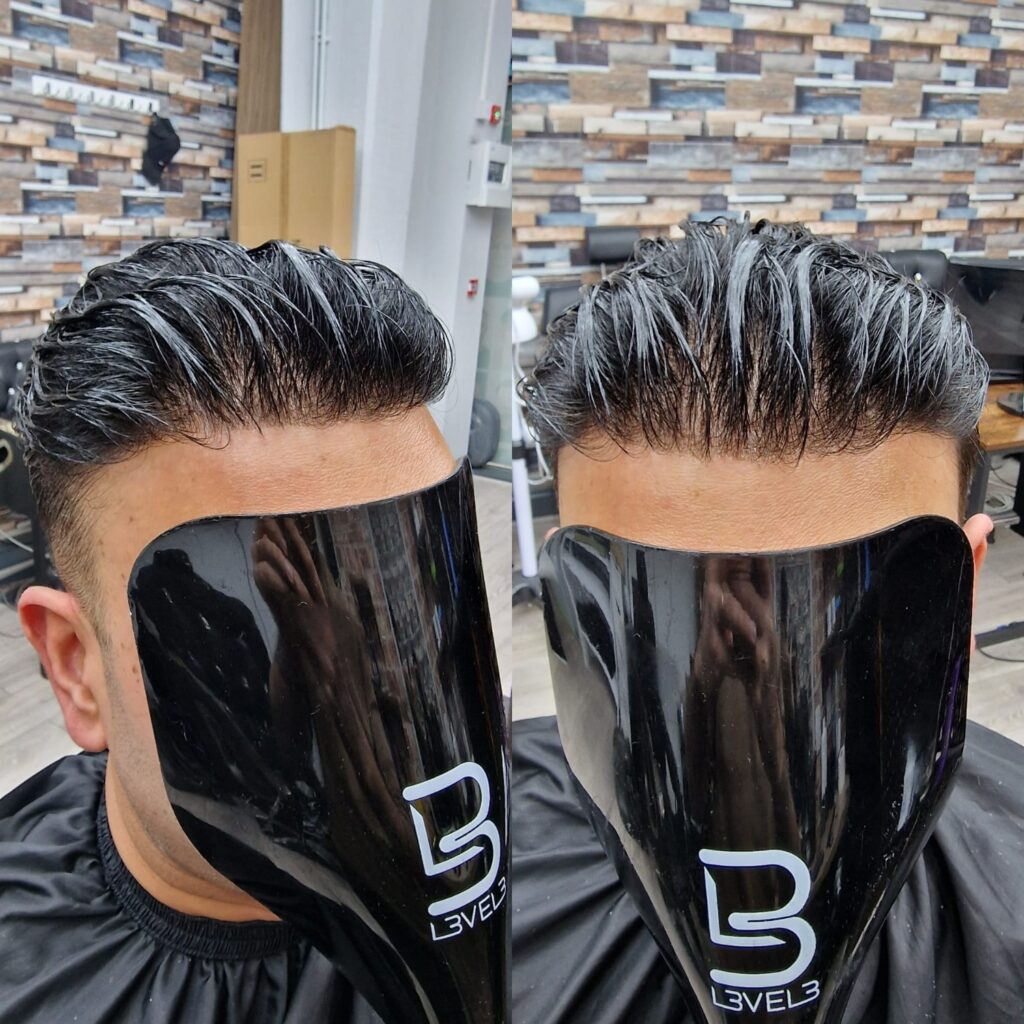
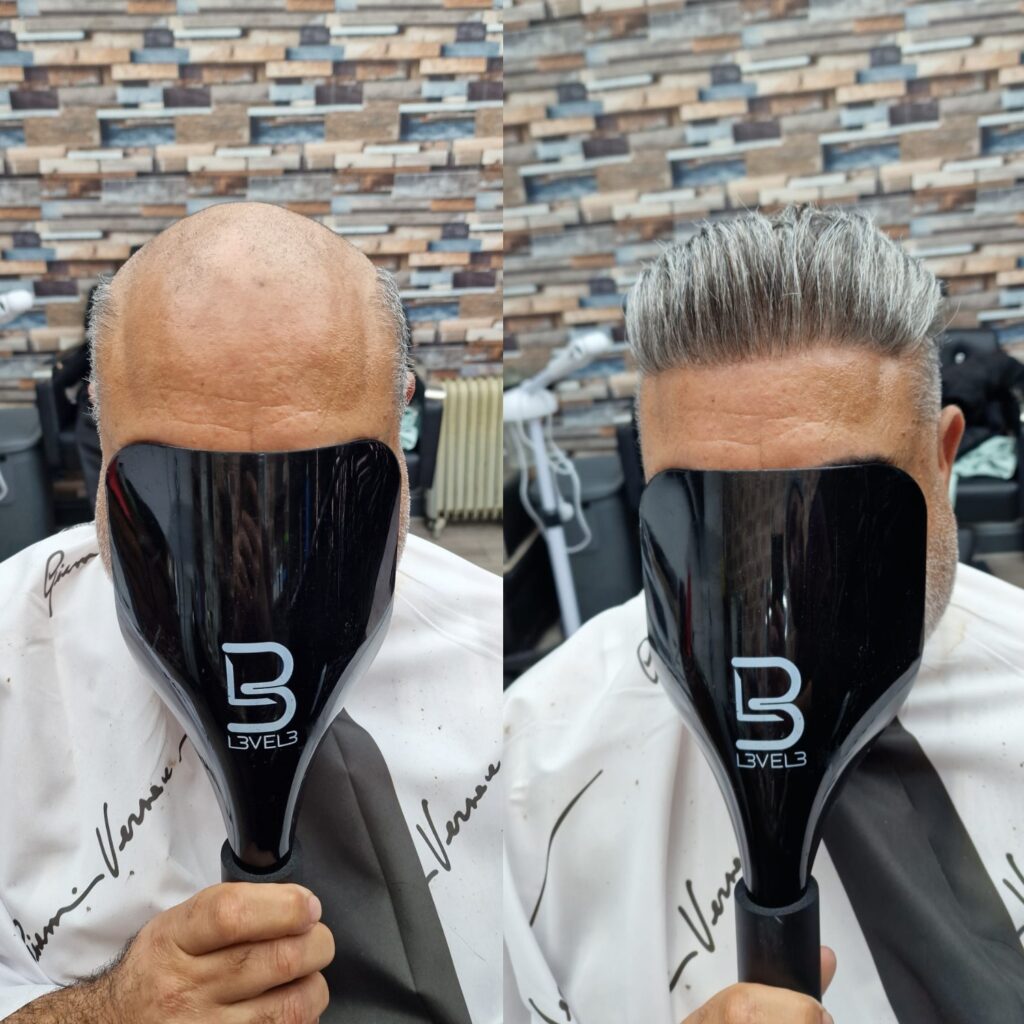
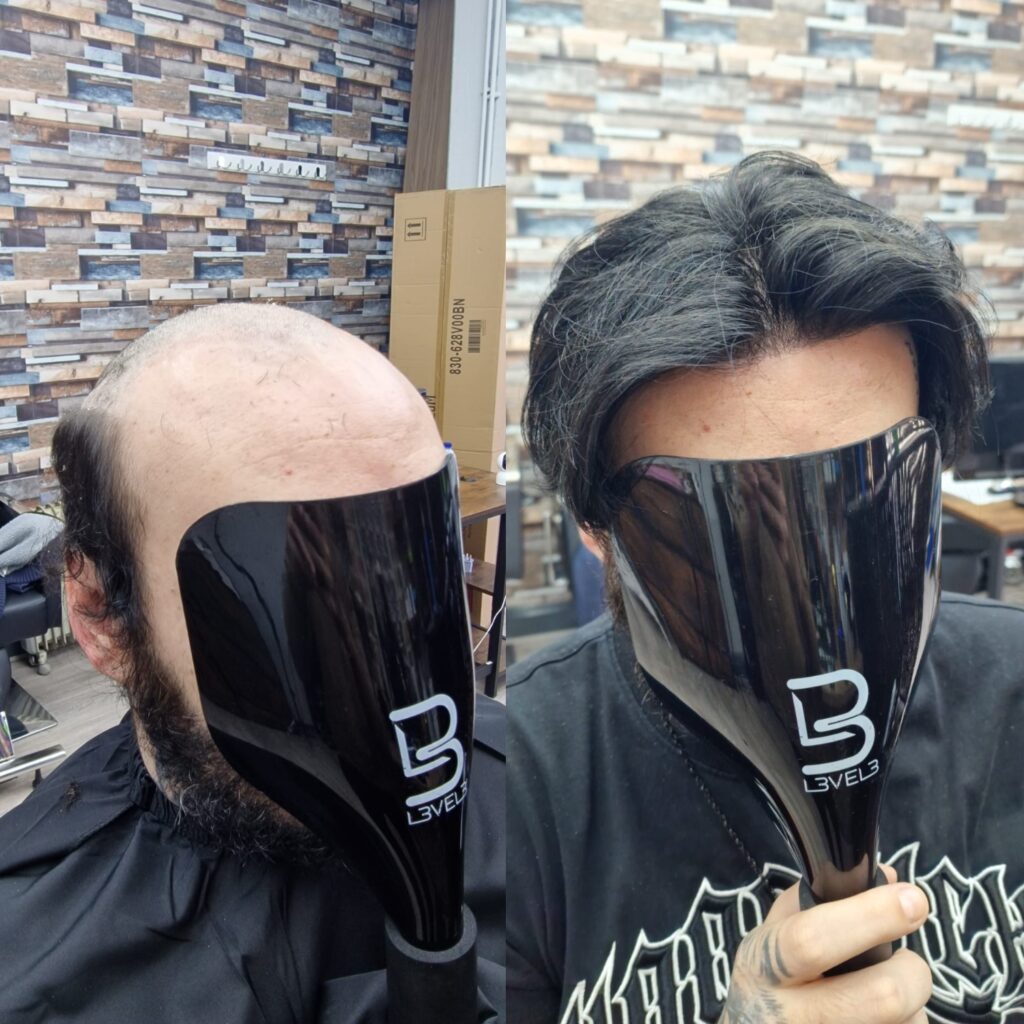
Ask ten men wearing hair systems what theirs is made of and most will tell you the hair: human, European, Indian, remy. Very few know the base. Yet the base, the thin foundation the hair is tied into, is what decides whether the hairline looks like skin, whether the system survives the gym, and whether it lasts three months or eight.
There are three families of base in use today: lace, poly (also called skin or thin skin) and hybrids that combine the two. We fit all three in our Ilford salon, so this guide has no favourite to sell you; it sets out what each one feels like to wear, what it costs you in care, and who it suits. If you would rather talk it through, a consultation is free.
What a hair system base actually does
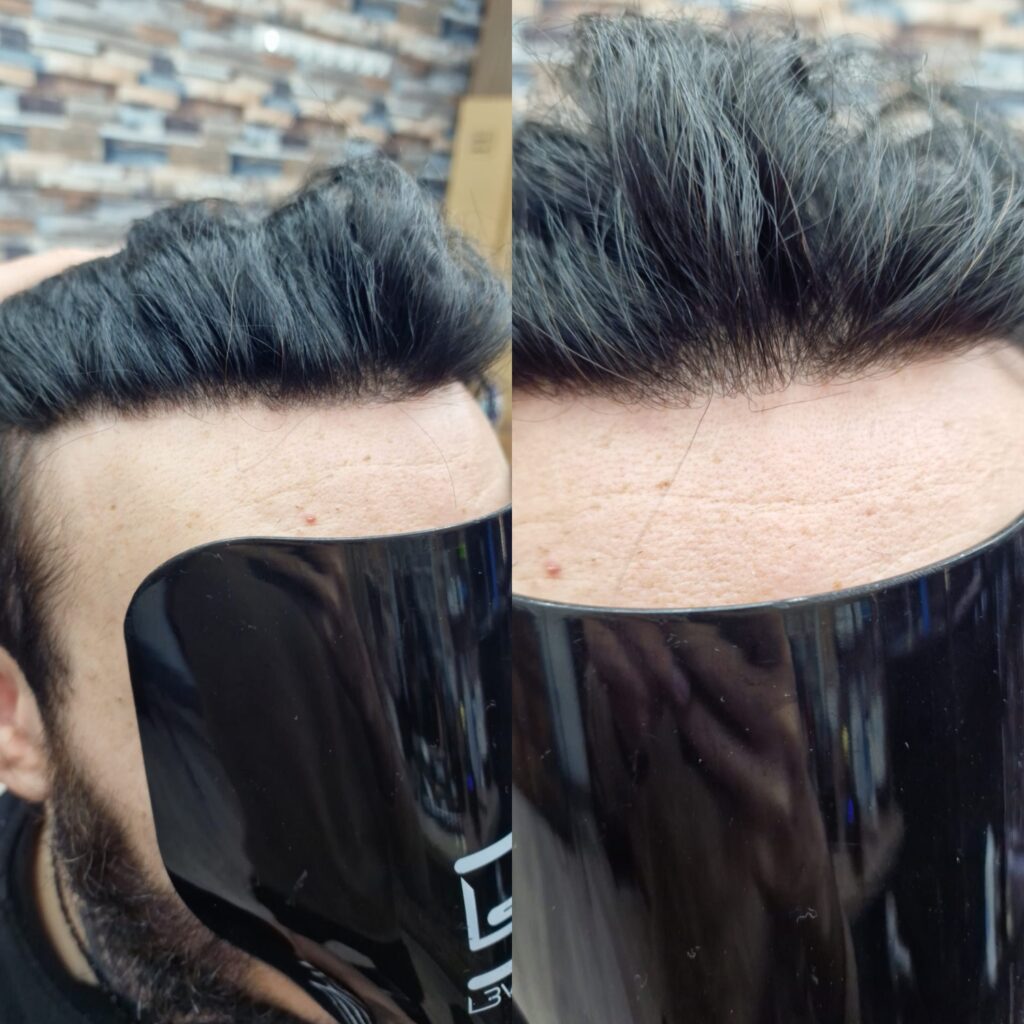
The base has three jobs. It holds every hair in place at the knot or the injection point. It carries the adhesive that bonds the system to your scalp. And at the front, it has to disappear: the first centimetre of base behind the hairline is what people see when they look at you, and it must read as skin with hair growing out of it. A base that does the first two jobs well but not the third gives you the “helmet” look that puts men off systems in the first place.
Lace bases
Lace is a fine mesh, with each hair hand-knotted to it. Air and water pass straight through, which is why lace is the coolest base to wear and the one most people forget they have on. The mesh melts into the scalp visually, so the hairline is as close to undetectable as a system gets, and the hair can be parted anywhere.
French lace
Slightly thicker and stronger than Swiss lace, and the one we recommend for most first systems. It copes with daily wear, re-bonding and the occasional careless comb, while still giving a natural front. For a man with a busy life who wants one system to last the full season, French lace is the sensible default.
Swiss lace
Finer, softer and even less visible, Swiss lace is the choice for a hairline that will be looked at closely: a very short cut, a slicked-back style or a hairline worn high. The trade-off is fragility. It tears more easily, needs gentler handling at every wash and has a shorter life. We fit it where the look justifies it and tell clients plainly what it asks of them.
Lace: the honest summary
- For: the most natural hairline, breathable, light, any parting.
- Against: the shortest life of the three, needs careful cleaning, adhesive can show through fine lace if applied badly.
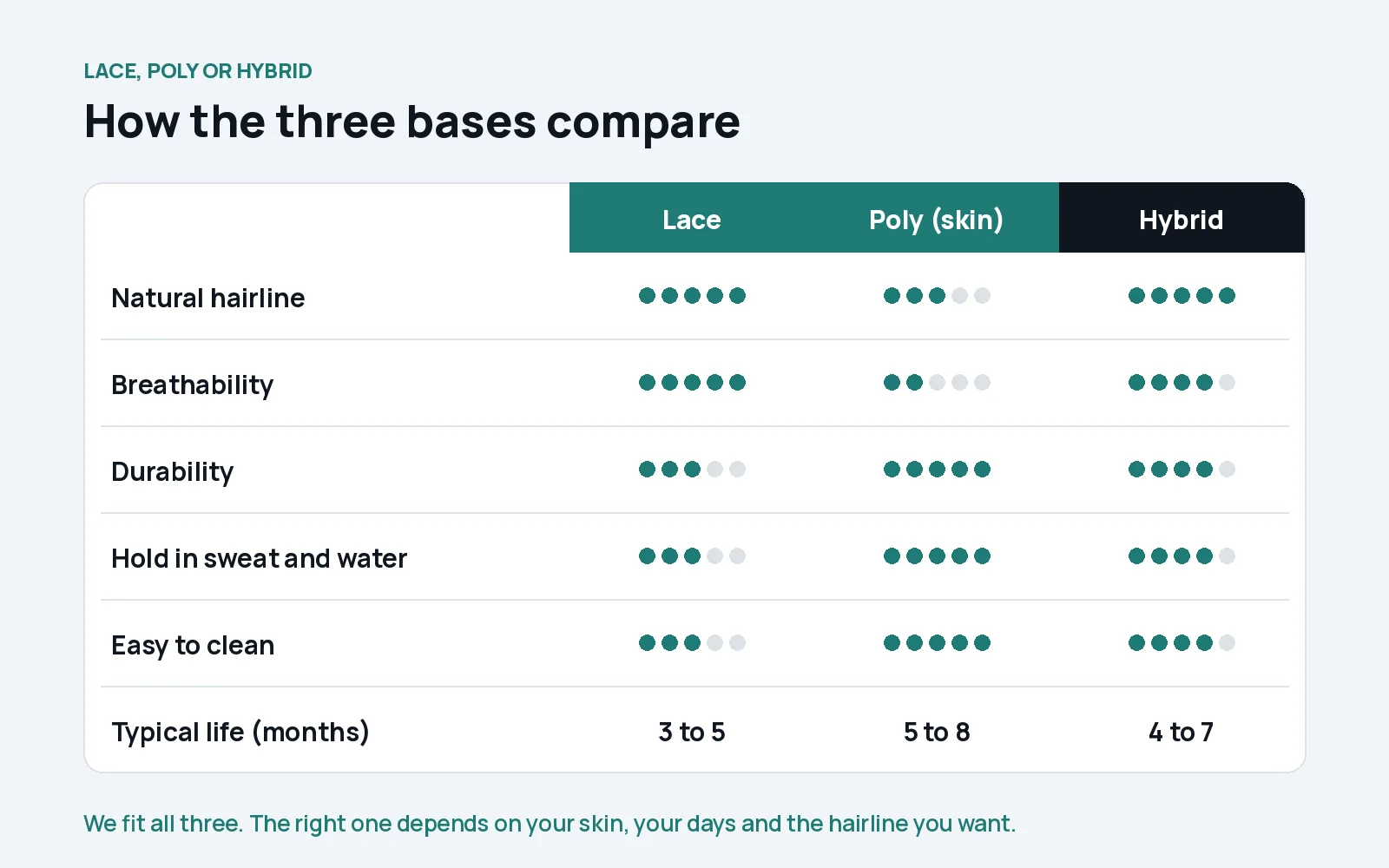
- Typical life: three to five months with monthly maintenance.
- Suits: men who want the hairline above all, office or indoor work, anyone who is good with a routine.
Poly (skin) bases
A poly base is a thin sheet of polyurethane with the hair injected or V-looped into it. There is no mesh to tear, nothing for sweat or water to soak into, and adhesive peels off it cleanly. Poly bases are the toughest and the easiest to clean, and a thin poly front can look very natural because the hair appears to grow out of skin rather than through knots.
The costs are heat and weight. Poly does not breathe, so in hot weather or hard training it feels warmer than lace, and the thicker grades can feel heavier. Very thin poly (0.03 mm and below) gives a superb hairline but gives up some of the durability that makes poly attractive in the first place; the thicker grades last longest and look least natural at the front.
- For: longest life, strongest hold, easiest cleaning, handles water and sweat.
- Against: warmer to wear, heavier in thick grades, the front can look flat if the poly is not thin enough.
- Typical life: five to eight months with monthly maintenance.
- Suits: gym and outdoor lives, swimmers, anyone who wants minimum fuss between visits.
Hybrid bases
A hybrid puts lace where it matters for looks and poly where it matters for strength: lace across the front for the hairline and parting, poly around the perimeter and often the crown for hold and durability. It is the most common base we fit, because it gives most men the result they want without asking them to choose between a natural front and a system that survives real life.
Hybrids come in several layouts. Lace front with a poly perimeter is the standard; lace front with poly sides and back suits men who sweat heavily at the nape; full lace with a thin poly skin at the temples helps anyone whose bond always lifts at the corners first. At a consultation we look at where your old systems failed and pick the layout accordingly.
- For: a natural hairline with a strong, long-lasting bond; forgiving of an active life.
- Against: slightly more to clean than full poly; the poly sections do not breathe.
- Typical life: four to seven months with monthly maintenance.
- Suits: most men, and nearly everyone on their second system.
Which base is right for you?
Four questions settle it in the salon:
- How will you wear your hair? A short cut, a high hairline or a style brushed back off the face wants lace at the front. A fuller style brushed forward is kinder to poly.
- What do your days involve? Training, swimming, physical work and hot environments all point to poly or a hybrid.
- How much care will you honestly do? Lace rewards a routine; poly forgives a missed one.
- Where did your last system fail? Lifting at the temples, tearing at the front and thinning at the crown each point to a different layout.
If you already own a system in one of these bases and are not happy with it, bring it in: we fit, cut and blend systems bought anywhere as our bring your own system service, and a different cut often solves what you thought was a base problem.
Whatever the base, the hair is human
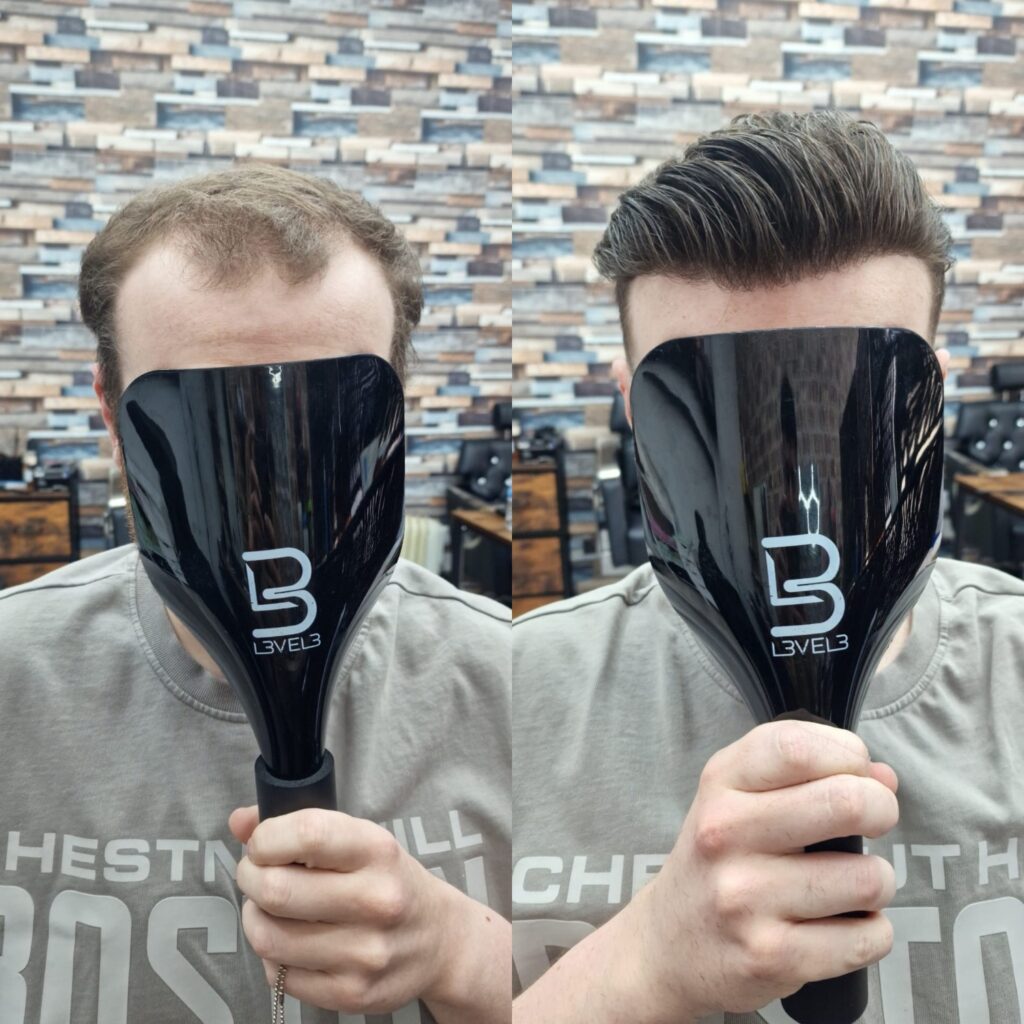
Every system we fit is 100% human hair, matched to your own for colour, texture and density, and cut into your own hair in the same appointment. A new hair system fitted, cut and blended is £500. After that a monthly maintenance visit keeps the base clean and the bond secure, which, more than the material, is what decides how long any base lasts (our guide to the signs a system needs a refresh shows what wear looks like on each base). You can read more about how systems work on our hair replacement for men page, or come and see the three bases side by side at the salon in Ilford.
Ask us on WhatsApp Book a free consultation
Frequently asked questions
Which hair system base looks the most natural?
Lace, and Swiss lace in particular, gives the most natural hairline because the mesh disappears against the scalp and the hair can be parted anywhere. A very thin poly front comes close. A hybrid with a lace front gives the same hairline with a stronger base behind it.
Which base lasts the longest?
Poly. A medium-thickness poly base typically lasts five to eight months with monthly maintenance, against three to five for lace. Hybrids sit in between.
Is a lace or a poly base better for sweating and the gym?
Poly or a hybrid with a poly perimeter. Sweat does not soak into polyurethane, so the bond holds better, and the base is easier to clean afterwards. Lace breathes better but the bond needs more attention if you train hard.
What is the difference between French lace and Swiss lace?
French lace is a little thicker and stronger, so it lasts longer and copes with daily handling. Swiss lace is finer and less visible, so the hairline is more natural, but it tears more easily and needs gentler care.
Can I change base material on my next system?
Yes, and many men do once they know how they wear a system. The template, colour match and cut carry over; only the base layout changes. We advise on it at your maintenance visits so the next system is ready before the current one wears out.